A backlit sign works your street corner all night without a single external fixture. The light comes from inside, the face glows evenly, and your name stays readable from the moment the sun drops. Here is how they are built and how to pick the right kind.
| Type | How it works | Best for |
|---|---|---|
| Backlit cabinet | LED modules behind a translucent acrylic or flex face | Storefronts, plazas, affordability |
| Face-lit channel letters | Each letter is its own lit cabinet | Branding on the building |
| Halo-lit letters | Light escapes backward, glowing against the wall | Upscale, dimensional look |
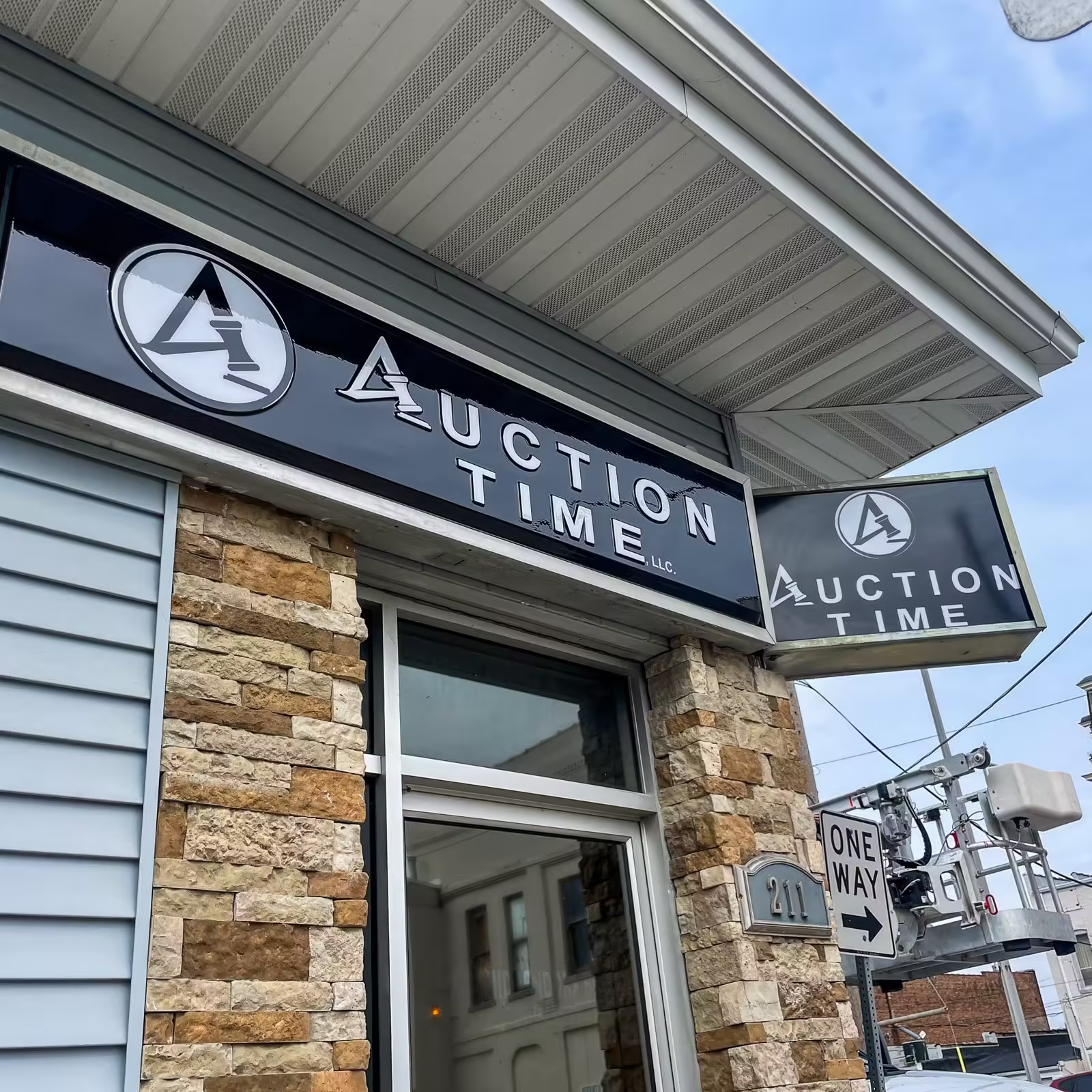
Older backlit cabinets ran fluorescent tubes: hot spots, cold-weather flicker, and ballasts that died on schedule. LED modules spread light evenly, run on a fraction of the power, and shrug off Illinois winters. If your existing sign still hums and flickers, an LED retrofit usually pays for itself and makes the face look new.
Each letter starts as an aluminum return, bent and welded to the exact shape of your logo font. LED modules line the inside, wired to a low-voltage power supply hidden behind the wall or inside the cabinet. A translucent acrylic face caps the front, so the light pushes evenly through the plastic instead of pooling behind it.
Trim cap seals the seam between the acrylic face and the aluminum return, both for weatherproofing and for a clean finished edge. Every letter runs on primary electrical brought to the wall by a licensed electrician; we coordinate that step so the sign is live the day it goes up, not weeks later.

| Option | Look | When it wins |
|---|---|---|
| Backlit cabinet or channel letters | Bright, even, reads far at night | Retail visibility on a busy street |
| Halo-lit letters | Soft glow around each letter against the wall | Upscale storefronts, lobbies, brand statements |
| External / gooseneck lighting | Classic, architectural | Historic districts, daytime-heavy traffic |
Most storefronts do not have to pick just one. A halo-lit primary sign over the door paired with backlit channel letters for a secondary tenant panel is a common combination we build, and either pairs well with an illuminated awning at the entrance.
The face material does more work than most buyers expect. White acrylic pushes the truest, brightest light and reads well from the farthest distance, which is why it dominates roadside channel letters. Colored acrylic (bronze, red, translucent blue) lets the letter read as your brand color even during the day, then glows that same color at night, but it always transmits less light than white, so we size the LED count differently behind a colored face to keep the letter bright.
Flex-face cabinets, common on wider backlit signs, use a printed vinyl or fabric skin stretched over a frame instead of rigid acrylic. It is lighter, often less expensive over a large area, and prints in full color, which matters for cabinets carrying a logo or a photo rather than plain letters.
Letter count and size set the baseline, since each letter is its own small lit cabinet. Single-face versus double-face, the depth of the return, and whether the job is a brand-new install or a re-face of an existing cabinet all move the number from there. A straightforward re-face almost always costs less than fabricating new letters from scratch, so we quote both side by side whenever the existing cabinet is sound.
Multi-location brands, like several of the projects pictured in this article, add one more factor: consistency across sites. Once we build the file for one location’s channel letters, repeating that exact spec at the next city keeps every store on-brand and keeps the unit price down compared with designing each location from a blank sheet.

Size it, light it, and flip it to night view in our free 3D builder.
Try the 3D BuilderAny sign that draws power needs an electrical permit, and most municipalities also require a building permit for the structural attachment of channel letters or a cabinet to your wall. Some downtown and historic districts limit brightness or restrict backlit signage to certain hours or storefront types, so it is worth checking local code before you commit to a design. We pull the required permits as part of every installed project, so this step happens in the background instead of landing on your desk.
LED modules are rated for years of nightly use and draw far less power than the fluorescent tubes they replaced, so the running cost of a backlit sign is genuinely low. When a module does fail, it shows up as a dark section rather than a total blackout, and it is a field repair, not a full rebuild. If a section of your sign has gone dark or dim, our sign repair team can usually swap the failed module in a single visit.

Talk to a sign company that builds backlit signs every week. We design and fabricate channel letters and cabinets in Central Illinois, install locally with our own crews, and manage installation nationwide through vetted partners for multi-location brands like the ones pictured above. Comparing options? Start with our field guide to sign types, browse the channel letter gallery for more examples like the ones above, or call (217) 860-0708 to walk through your building and your budget.
